
Total Concrete Coatings & Polish provides professional epoxy garage flooring, Fayetteville NC homeowners can rely on, with properly prepared epoxy and polyaspartic flooring systems for garages throughout Fayetteville and surrounding communities. Owner Richard Gillis brings more than 10 years of hands-on concrete flooring experience to every project, with particular attention to surface preparation, concrete repairs and selecting the right flooring system for the condition of the concrete and how the garage will be used.
Why Choose Total Concrete for Your Garage Floor?
Epoxy garage flooring Fayetteville NC homeowners actually starts with the condition of the concrete underneath it and the preparation performed before the coating is installed. Total Concrete Coatings & Polish approaches garage flooring as a complete flooring system—from evaluating the existing concrete to preparing the surface, making necessary repairs and selecting the appropriate coating system.
10+ Years Experience
Owner Richard Gillis brings more than 10 years of hands-on concrete flooring experience to every project.
Owner-Involved Service
Deal directly with Richard when evaluating your concrete and discussing the right flooring options for your garage.
Proper Concrete Preparation
Mechanical surface preparation and necessary concrete repairs help create the proper surface for the coating system.
The Right System for Your Garage
The condition of the concrete, how the garage will be used and the desired finish all help determine the flooring system Richard recommends.
Before We Coat Your Garage Floor, We Evaluate the Concrete
No two concrete garage floors are exactly alike. Before recommending a coating system, Total Concrete Coatings & Polish looks at the condition of the existing slab and any issues that could affect preparation or installation.
Richard evaluates factors such as:
- Existing coatings or sealers — Previous products may need to be mechanically removed before a new system can be installed.
- Cracks and surface damage — Cracks, spalling and damaged areas should be identified so appropriate repairs can be made during preparation.
- Oil, grease and other contamination — Contaminants in the concrete can interfere with proper coating adhesion and may require additional preparation.
- Moisture concerns — Signs of moisture or other slab conditions need to be considered before choosing and installing a coating system.
- How the garage will be used — Vehicle traffic, workshop use, storage, desired appearance and other practical needs can influence the recommended flooring system.
Proper surface preparation is an important part of installing a durable concrete coating system. For additional information about concrete surface preparation standards, visit the International Concrete Repair Institute (ICRI).
The goal is not simply to put a coating over the concrete. It is to understand the condition of the slab first so the floor can be properly prepared and the appropriate system can be selected.
Fayetteville-Area Garage Floor Project
This Fayetteville-area project shows how professional surface preparation and a decorative flake coating system can transform an existing concrete slab into the type of epoxy garage flooring Fayetteville NC homeowners want for a durable, attractive garage floor.
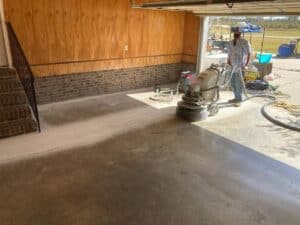
Professional concrete surface preparation on a Fayetteville-area garage floor.
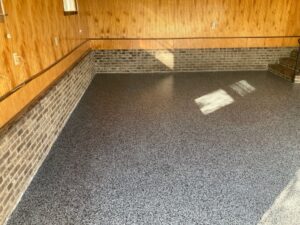
Completed decorative flake garage floor coating on a Fayetteville-area project.
Proper surface preparation is critical to the performance of an epoxy or polyaspartic garage floor. Applying a coating over concrete that has not been properly prepared can interfere with adhesion and contribute to premature coating failure.
At Total Concrete Coatings & Polish, preparation is based on the condition of the existing concrete and may include:
- Mechanical Surface Preparation — The concrete is mechanically ground to remove surface contaminants, previous coatings when necessary and the weak surface layer of the concrete while creating the profile needed for the coating system.
- Crack and Surface Repairs — Cracks, spalled areas and other surface damage are addressed as appropriate before the coating system is applied.
- Detailed Surface Cleaning — Dust and debris created during preparation are removed so the coating is applied to a clean, properly prepared surface.
- Coating System Installation — Once preparation and repairs are complete, the selected epoxy, decorative flake or other coating components are installed according to the flooring system being used.
- Protective Topcoat — When the selected system calls for it, a protective topcoat such as polyaspartic or polyurethane is applied to provide the finished wearing surface.
The important part happens before the floor gets its color and shine. Proper preparation creates the foundation for the entire garage flooring system.
From Concrete Preparation to Finished Floor
These photos show the surface preparation and completed garage floor from the same Total Concrete Coatings & Polish project.
Epoxy Garage Flooring Fayetteville NC Options
When choosing epoxy garage flooring Fayetteville NC property owners should consider the condition of the concrete, how the garage will be used, the appearance they want and the performance characteristics needed for the project. Total Concrete Coatings & Polish can help determine which coating system and finish make the most sense for the garage.
Epoxy Garage Flooring
Epoxy creates a durable, seamless surface and can be used as part of several garage flooring systems. It is available in different colors and finishes and can also serve as a base coat for decorative flake systems.
Decorative Flake Garage Floors
Decorative flakes are broadcast into the coating to create a textured, multi-color appearance. Flake systems are popular for garages because they provide an attractive finished look while helping disguise minor dirt and everyday visual imperfections.
Polyaspartic Coatings
Polyaspartic products can be used as part of a garage flooring system, including as protective topcoats. Their properties can make them useful where durability, UV stability or faster return-to-service are important considerations. We also install broader epoxy and polyaspartic flooring systems in Fayetteville for residential and commercial concrete surfaces.
Metallic Epoxy Floors
Metallic epoxy creates a more decorative, custom appearance with flowing patterns and visual variation across the floor. Because the finished appearance is intentionally less uniform, metallic systems are generally chosen when creating a distinctive look is a priority.
There isn’t one coating system that is automatically right for every garage. Richard can evaluate your concrete, discuss how you use the space and help you choose the system and finish that best fit the project.
DIY Epoxy vs. Professional Garage Floor Coatings
DIY epoxy kits can improve the appearance of a garage floor, but the biggest difference between a DIY application and a professionally installed system is often what happens before the coating is applied.
Many DIY products rely on cleaning or acid etching to prepare the concrete. Professional installation allows for mechanical surface preparation, evaluation of the existing slab, necessary repairs and selection of coating products appropriate for the project.
Some of the important differences include:
- Surface preparation — Mechanical grinding can create a more consistent surface profile for coating adhesion than cleaning alone.
- Concrete repairs — Cracks, spalling and damaged areas can be identified and addressed as part of the preparation process.
- Coating system selection — The products and system can be selected based on the condition of the concrete, garage use and desired finish rather than relying on a one-size-fits-all kit.
- Application experience — Working times, coverage, decorative flake broadcast and topcoat application all affect the finished floor.
- Problem identification — Existing coatings, contamination, moisture concerns and other slab conditions can affect how a floor should be prepared and coated.
For homeowners comparing a DIY kit with professional epoxy garage flooring in Fayetteville, NC, the decision should involve more than the price of the coating itself. Proper evaluation and preparation of the concrete are fundamental parts of the finished flooring system.
Questions to Ask Before Hiring a Garage Floor Coating Contractor
Choosing a garage floor coating contractor should involve more than comparing colors and prices. The preparation process, condition of the concrete and products used can all affect the finished floor.
Before hiring a contractor, consider asking:
- How will the concrete be prepared? Ask whether the floor will be mechanically prepared and how existing coatings, sealers or contaminants will be addressed.
- How are cracks and damaged areas handled? The contractor should evaluate the condition of the slab and explain what repairs are appropriate before coating.
- What coating system will be installed? Ask what products and layers are included in the proposed system rather than relying only on terms such as “epoxy floor.”
- Why is that system appropriate for my garage? Product selection should take into account the condition of the concrete, how the garage will be used and the desired finish.
- What should I expect during installation? Ask about preparation, installation steps, project timing and when you can walk on the floor or return vehicles to the garage.
- What maintenance will the finished floor require? A contractor should be able to explain how to clean and care for the flooring system after installation.
A professional estimate should give you an opportunity to discuss these questions before deciding which garage flooring system is right for your property.
How Long Does Garage Floor Installation Take?
Installation time depends on the condition of the concrete, the amount of preparation and repair required, and the flooring system being installed. Some garage floors require more preparation than others, so Total Concrete does not assume that every project will follow the same installation schedule.
During your estimate, Richard can explain the anticipated installation process and timeline based on the condition of your garage floor and the system selected.
When Can I Use My Garage Again?
Return-to-service time also depends on the products used and installation conditions. Walking on the floor, moving stored items back into the garage and parking vehicles may require different waiting periods.
Total Concrete will provide instructions for your specific flooring system so you know when the floor is ready for normal use.
Are Epoxy Garage Floors Slippery?
Like many smooth flooring surfaces, a coated garage floor can become slippery when wet. Slip resistance can be an important consideration when selecting the finish for a garage, particularly in areas where water may be tracked onto the floor.
Depending on the flooring system and how the garage will be used, texture or slip-resistant additives may be incorporated into the finished surface. Richard can discuss these options when recommending a system for your garage.
How Do You Maintain a Coated Garage Floor?
One advantage of a seamless coated garage floor is that routine cleaning is relatively straightforward. Regular care can help maintain the appearance of the finished surface.
For routine maintenance:
- Remove loose dirt, sand and debris with a broom, dust mop or similar method.
- Clean the floor as needed using water and a suitable mild cleaner.
- Clean oil, grease and other spills promptly.
- Avoid harsh chemicals or cleaning methods that are not recommended for the installed coating system.
- Follow any specific care instructions Total Concrete provides for your finished floor.
The exact maintenance recommendations may vary depending on the coating system installed, so ask Richard about the appropriate cleaning and care methods for your floor.
What About Moisture in the Concrete?
Concrete is porous, and moisture conditions within or beneath a slab can affect some coating installations. Signs of moisture or other unusual slab conditions should therefore be considered when evaluating a garage floor.
If moisture is a concern, Richard can discuss the condition of the concrete and whether additional evaluation or a different approach may be appropriate before proceeding with the coating system.
This is another reason evaluating the existing concrete is an important part of planning a garage flooring project.
Garage Floor Coatings for Fayetteville NC Homes
Fayetteville garages deal with conditions that can be tough on bare concrete, including summer heat and humidity, moisture tracked in during wet weather, vehicle traffic, dirt, sand and everyday garage use.
A professionally installed garage floor coating can provide a finished surface that is easier to clean and maintain while improving the appearance of the garage. The right system depends on the condition of the existing concrete, how the garage is used and the type of finish the homeowner wants. Learn more about our epoxy flooring and concrete coating services in Fayetteville NC.
Total Concrete Coatings & Polish works with homeowners throughout Fayetteville, Fort Bragg, Hope Mills, Spring Lake and surrounding communities. Richard evaluates the existing concrete before recommending an epoxy, decorative flake, polyaspartic or other coating system appropriate for the project.
What Customers Say About Total Concrete
★★★★★
“Excellent quality work
The workers were very professional
Highly recommend this company”
Pinkey Johnson
Google Review
★★★★★
“Absolutely the best in the business! We utilize all their expertise across all of our apartment communities and the work is exceptional and the customer service is out of this world! Highly recommend Richard and the team!”
Jenn P
Google Review
Epoxy Garage Flooring Fayetteville NC & Surrounding Areas
Total Concrete Coatings & Polish provides professional epoxy garage flooring in Fayetteville NC and surrounding communities, along with polyaspartic and other garage floor coating options. Whether you’re upgrading a residential garage, workshop or other concrete space, Richard can evaluate the existing floor and recommend a coating system based on the condition of the concrete and how the space will be used.
Garage flooring services are available in Fayetteville and communities throughout the surrounding area, including:
Not sure whether your property is within the service area? Call (910) 490-4120 or request a free estimate to discuss your project.
Frequently Asked Questions About Epoxy Garage Flooring in Fayetteville NC
How much does an epoxy garage floor cost in Fayetteville, NC?
The cost of a professionally installed garage floor depends on the size and condition of the concrete, the preparation and repairs required, and the coating system and finish selected. Because existing concrete can vary considerably from one garage to another, Total Concrete Coatings & Polish provides free on-site estimates so Richard can evaluate the floor before recommending a system and providing pricing.
Is epoxy or polyaspartic better for a garage floor?
Neither is automatically the best choice for every garage. Epoxy and polyaspartic products have different characteristics, and some professional garage flooring systems use different materials for different layers. Richard can recommend a system based on the condition of your concrete, sunlight exposure, garage use, desired appearance and return-to-service requirements.
Can you coat an old or cracked garage floor?
Many older garage floors can be coated, but the existing concrete needs to be evaluated first. Cracks, spalling, previous coatings, sealers and other surface conditions may require repair or additional preparation before a new coating system is installed.
Why do some epoxy garage floors peel?
Poor adhesion can result from inadequate surface preparation, contamination, moisture-related conditions or other problems between the coating and concrete. This is why Total Concrete emphasizes mechanical surface preparation and evaluation of the existing slab before installing a garage flooring system.
Do you provide garage floor coatings near Fort Bragg and Hope Mills?
Yes. Total Concrete Coatings & Polish serves Fayetteville and surrounding communities including Fort Bragg, Hope Mills, Spring Lake, Raeford, Rockfish, Stedman and Eastover. Contact Total Concrete if you’re unsure whether your property is within the current service area.
Do you provide free estimates for garage floor coatings in Fayetteville?
Yes. Total Concrete Coatings & Polish offers free on-site estimates for Fayetteville-area garage flooring projects. Richard can evaluate the existing concrete, discuss how you use the garage and explain the coating options appropriate for the project.
Ready to Upgrade Your Garage Floor?
If you’re considering epoxy or polyaspartic garage flooring in Fayetteville or a surrounding community, contact Total Concrete Coatings & Polish for a free on-site estimate.
Richard can evaluate your existing concrete, discuss how you use the garage and explain the flooring options appropriate for your project.